January 28, 2026
Three Major Regional Market Insights for Global Health Lighting in 2025: North America, Europe, and Southeast Asia Each Have Their Own Strengths
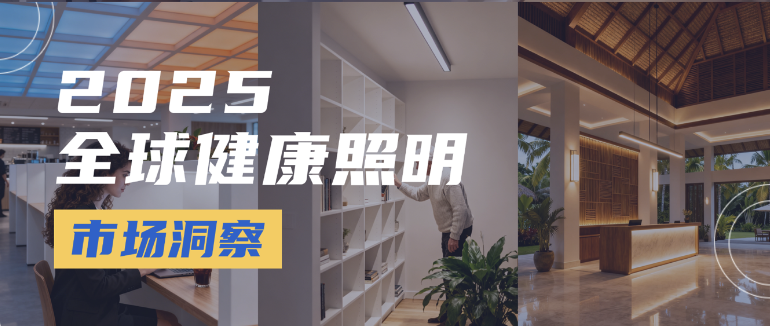
Driven by both rising demand for health-focused lighting and innovations in smart technology, health lighting has evolved from a “niche segment” of the lighting industry into a core growth engine.By 2025, the global LED lighting market is projected to rebound to $56.626 billion (data from TrendForce), with health lighting—thanks to its high value-added attributes—emerging as a key driver of industry growth.
North America, Europe, and Southeast Asia—the three core regions for global health lighting development—exhibit distinct development patterns in terms of technological approaches, market dynamics, and application scenarios.
The North American market, centered on “technology leadership and high-end demand,”leads in the commercialization of smart and circadian rhythm regulation technologies; the European market focuses on “standards-driven development and sustainability,”with human-centered lighting deeply integrated with environmental protection principles; and the Southeast Asian market, leveraging “cost advantages and application-scenario opportunities,”has become the fastest-growing region, driven by robust demand in hotel and commercial office settings.These three regions complement each other’s development, jointly driving the global healthy lighting industry toward smarter, more user-friendly, and greener solutions.
Technology-Driven, with High-End Demand Leading Growth
In 2025, the North American healthy lighting market will experience steady growth, supported by ongoing demand for upgrades in the healthcare, high-end office, and residential sectors. Although the growth rate lags behind that of emerging markets, North America remains one of the world’s core markets due to its massive market base and mature consumer demand.
North America demonstrates “end-to-end leadership” in the field of health lighting technology, with core technologies spanning three key dimensions: materials, controls, and ergonomics.
Industrialization of Full-Spectrum Technology: Represented by Prism Optoelectronics’ Thrive™ Natural Spectrum Technology, this achieves a spectral distribution closer to natural light, simulating the solar spectrum while reducing blue light hazards;
Deep Integration of Smart Control: Based on a 5G MEC edge computing architecture, this enables precise control at the millisecond level; the integration of AI algorithms with micro-biosensors dynamically adjusts the lighting environment based on users’ physiological states and habits;
Precise Circadian Rhythm Regulation: Applications in medical and office settings are already well-established; related technologies can effectively reduce eye strain and enhance concentration.
In North America, health-focused lighting applications are highly concentrated, with office and healthcare settings combined accounting for approximately 60% of the market share.
Office Settings: The Human-Centric Lighting (HCL) market is growing rapidly. Smart lighting systems simulate the rhythms of natural light to enhance employee focus, improve work performance, and reduce fatigue. Some commercial buildings undergoing smart lighting retrofits are eligible for project subsidies of up to 30%, further driving the adoption of this technology;
Healthcare Settings: This is the most extensively adopted application, with color-temperature-adjustable surgical lighting systems now installed in most tertiary hospitals. Lighting serves not only to provide illumination but also as an integral part of the therapeutic environment, designed to improve patient recovery and the well-being of healthcare staff;
Residential Settings: Showing trends toward high-end and personalized solutions, demand for whole-home healthy lighting systems is strong, with rapid growth in products featuring circadian rhythm regulation and high color rendering indices.
4. Policy and Market Drivers: Dual Drivers of Stringent Standards and Upgraded Demand
On the policy front, North America has established a rigorous dual-certification system, with UL safety certification and DLC energy efficiency certification serving as core barriers to market entry. The DLC SSL V6.0 standard, set to take effect in January 2026, raises the minimum luminous efficacy requirement for indoor products to 125 lumens per watt—a 14% increase over the previous standard;In addition, building codes such as California’s CEC 2025 Title 24 mandate the use of high-performance lighting systems in new construction, further raising the technical bar.
On the demand side, growing consumer health awareness is combined with increasing corporate demand for efficiency. A 54% smart home penetration rate is driving demand for whole-home health lighting, while investment in healthy environments is increasing in office spaces.
Standard-Driven: Green and Health Go Hand in Hand
1. Market Size: Steady Growth with High Regional Concentration
The European healthy lighting market is highly mature, with Germany, France, and the United Kingdom serving as the three major markets, collectively accounting for over 70% of the market share. Market growth is driven by strict energy efficiency regulations and circular economy goals, resulting in steady growth.
2. Technological Development: A Benchmark in Human-Centered Lighting, Sustainable Technological Innovation
Europe’s technological advantage lies not in cutting-edge chips, but in its scientific understanding and systematic application of the relationship between “light and people.”
Global Leadership in Human-Centric Lighting: Europe is the birthplace of the HCL concept and the standard-setter in this field. The latest revision of the EN 12464 lighting standard further emphasizes the impact of lighting on mood and alertness.
Emphasis on Holistic Solutions and Sustainability: Companies such as Signify, with its BioUp chip, and Philips, with its LumCare age-friendly lighting solutions, demonstrate the ability to deeply integrate smart controls, health research, and product design. At the same time, the pursuit of eco-friendly materials and modular designs to enhance recyclability is a key hallmark of European technology.
3. Application Scenarios: Balanced Focus on Offices and Healthcare; Emphasis on Quality in Residential Settings
Equal Emphasis on Office and Healthcare: Europe sets extremely high standards for light quality in work and healthcare environments; lighting design must strictly adhere to relevant standards to enhance work efficiency and the quality of patient care;
Residential Settings Prioritize Sustainability: As consumer demands for health and environmental protection converge, there is a preference for simple, durable, and low-maintenance products, and consumers are willing to pay a premium for eco-friendly features. The application of human-centered lighting in residential settings is gradually expanding, with growing demand for products with adjustable color temperature, and age-friendly lighting solutions have emerged as a new trend.
4. Policy and Market Drivers:
Strict Regulations and Deeply Rooted Environmental Awareness
On the policy front, Europe has established the world’s strictest lighting standards system. CE certification covers multiple directives, including Low Voltage, Electromagnetic Compatibility, and RoHS. Enforcement of the ErP Directive will be strengthened in 2025,the standby power consumption limit for LED luminaires will be tightened from ≤1.0W to ≤0.5W, with a power consumption limit of ≤0.3W for specific sleep modes; requirements vary slightly by luminaire type.
On the market side, consumer environmental awareness is deeply intertwined with health concerns. Government funding for energy-efficient retrofits of public buildings, along with infrastructure upgrades at private hospitals, is collectively driving market growth. Nordic countries such as Sweden and Finland consider the quality of the lighting environment a key indicator in educational assessments; by 2025, more than 90% of public elementary and secondary schools will have completed upgrades to their healthy lighting systems.
Unlocking Potential: Value for Money and Application-Specific Benefits Come to the Forefront
1. Market Size: Small Base, but Leading Global Growth Rate
By 2025, although the Southeast Asian healthy lighting market will remain smaller than those in North America and Europe, its growth rate will lead the world, making it the most promising emerging market. Massive infrastructure development, rapid urbanization, and the booming digital economy provide enormous room for growth.
Development levels vary significantly across the region. Singapore and Malaysia, as economically developed areas, are leading the demand for healthy lighting, while Vietnam and Thailand are experiencing rapid market growth.
2. Technological Development: Application-Driven, with a Focus on Value for Money
Health lighting technology in Southeast Asia is generally in its early stages, with a core focus on “upgrading basic functions” and “popularizing smart lighting.”
Emphasis on Application-Oriented Technologies: While market penetration of basic health-related technologies—such as full-spectrum lighting and flicker-free lighting—is increasing, greater attention is being paid to technologies that deliver tangible improvements in user experience at manageable costs, such as smart dimming and color tuning, as well as IoT integration;
Local Innovation and Government Initiatives: Local companies are capturing market share through value for money and rapid responsiveness. At the same time, governments across the region are actively promoting technological upgrades; for example, Thailand has established new energy efficiency standards, and Malaysia has incorporated smart lighting into its green building certification.
3. Scenario Applications:
Infrastructure and Commercial Sectors Lead the Way, with Simultaneous Expansion Across Multiple Scenarios
Commercial Lighting and Infrastructure: Driven by the growth of the tourism industry, hotels, retail spaces, and a large number of public infrastructure construction projects are generating massive demand for LED and smart lighting;In commercial hubs such as Singapore and Kuala Lumpur, driven by the influx of multinational corporations, demand for high-quality office lighting is growing; infrastructure projects—such as the construction of Indonesia’s new capital and the renovation of rural streetlights in Malaysia—are further driving demand for outdoor and commercial smart lighting;
Specific bioluminescence applications: Specialized applications such as plant lighting are rapidly emerging, while niche areas like aquaculture lighting are gradually being explored, highlighting the trend toward diversified market applications.
4. Policy and Market Drivers: Infrastructure-Driven Growth and Policy Benefits
Market drivers stem primarily from “development” itself: ongoing urbanization in countries such as Vietnam and Thailand is driving growth in new construction and associated lighting demand; Malaysia and Indonesia continue to increase investment in public lighting upgrades, with representative projects such as the municipal lighting project for Indonesia’s new capital, which has a budget of $430 million. Industrial lighting demand resulting from manufacturing relocation collectively constitutes a growth driver.
The policy environments vary significantly across countries. While Singapore (PSB certification) and Malaysia (SIRIM certification) have relatively well-established systems, countries such as Thailand and Vietnam are currently advancing their own localized certification processes. However, consumers are extremely price-sensitive, with the mainstream price range concentrated below $100—a stark contrast to the high-end demand seen in North America.
Diverse Evolution, Convergence and Symbiosis
The global health lighting market in 2025 will not follow a single linear growth model but will instead undergo a diverse evolution shaped by the combined influence of geographic characteristics, economic levels, and cultural concepts. North America is building barriers through technological innovation, Europe is leading the industry’s direction through standards, and Southeast Asia is unlocking its potential through rapid growth; these three regions are collectively driving the industry’s continued expansion.
Although the paths differ, convergence is the ultimate trend. Core technologies such as full-spectrum lighting, flicker-free lighting, smart dimming, human-centered lighting, and UV-C disinfection are becoming standard features in high-end products worldwide. The integration of AI, the Internet of Things (IoT), and lighting will also blur geographical boundaries, providing more personalized healthy lighting environments.
As health awareness grows and technology matures, healthy lighting will transcend its role as a mere “lighting tool” to become a core component of the smart health ecosystem.
References/Data
1. TrendForce. Global LED Lighting Market Size Report [Report]. 2025.
2. LightingEurope. European Lighting Industry Strategic Roadmap 2025 [Report]. 2025.
3. DesignLights Consortium (DLC). DLC SSL V6.0 Standard [Standard]. 2026.
4. California Energy Commission. California Title 24 Building Code 2025 [Standard]. 2025.
5. China Report Hall. Research Report on the Current Status and Development Prospects of the Global and Chinese Lighting Industry (2025–2030) [Report].
6. Guanyan Report Network. In-Depth Analysis and Investment Strategy Research Report on the Development of China’s Healthcare Lighting Industry (2025–2032) [Report].
7. European Union. ErP Directive (EU 2019/2020) [Standard]. 2025.
8. European Union. EN 12464 Lighting Standard (Revised Edition) [Standard]. 2025.
9. Singapore Standards, Productivity, and Innovation Board (PSB Corporation). Singapore PSB Lighting Product Certification Standard [Standard]. 2025.
10. Standards and Industrial Research Institute of Malaysia (SIRIM Berhad). Malaysian SIRIM Lighting Product Certification Standard [Standard]. 2025.