April 27, 2026
"Intelligent control is more than control|When devices start to participate in every scene of life.
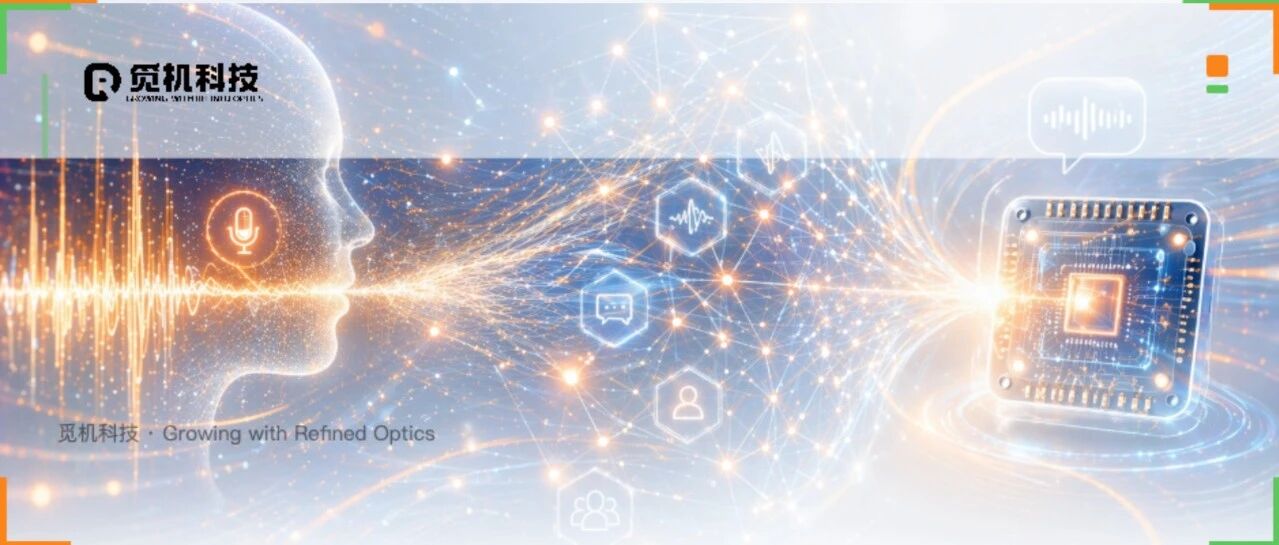
Today, many smart devices have learned to "obey commands," but they haven't yet truly learned to "understand."
Voice control has rapidly gained popularity in recent years. From lighting and air conditioners to small kitchen appliances, hands-free operation has become a standard feature of smart products.
However, most devices are still stuck at the “command execution” stage, requiring users to speak in a way the device can understand.
“Set the air conditioner to 26 degrees, cooling mode, fan speed level two.”
This is language the machine can understand, not everyday human speech.
Meanwhile, users’ expectations for voice interaction are evolving—from “functional” to “user-friendly,” and from “speaking in fixed phrases” to “expressing themselves naturally.”
The emergence of AI large-model voice modules has, for the first time, shifted voice interaction from “command matching” to “intent understanding.”
PART-01
At the Desk: Devices Begin to Participate in the Process
What’s happening here is more than just the addition of features. It’s about devices shifting from being “used” to “participating in the process.”
Children no longer need to switch back and forth between desk lamps, smartphones, and parents; a single, natural conversational interface handles information retrieval, time management, and environmental adjustments.
PART-02
In the Living Room: People No Longer Need to Learn the Device’s Language
No temperature readings, no fixed phrases. Devices understand intent through continuous conversation and make adjustments accordingly.
The burden of interaction has shifted from the user to the system.
Only when devices begin to adapt to people—rather than forcing people to adapt to devices—do smart products truly have the potential for widespread adoption.
PART-03
In the Kitchen: Voice Becomes the Most Seamless Interaction Method
In the kitchen, people’s hands are often occupied. When they want to use voice control, they get stuck at the first attempt: if they don’t say it right, there’s no response; repeating it disrupts their workflow; and eventually, they simply give up on voice control and free up their hands to operate the device manually.
The issue isn’t whether voice control “works,” but whether voice interaction is natural enough.
This places entirely new demands on the system:
Understanding and retrieving information
Controlling devices
Switching between tasks
Voice is no longer just an option; it has become the most seamless way to interact.
PART-04
From “Controlling Devices” to “Understanding Needs”
Traditional voice systems are essentially “keyword-triggered controllers.”
In contrast, large-scale language model-based voice modules are beginning to possess the following three core capabilities:
Intent Understanding: Parsing natural expressions without relying on fixed commands
Multi-turn conversation: Maintaining context within a continuous dialogue
Capability Expansion: Accessing real-time information and services via network connectivity
When these three capabilities are combined, they bring about not just “more user-friendly voice,” but a shift in the paradigm of interaction:
From “controlling devices” to “expressing needs.”
PART-05
The Interaction Layer Is Becoming the Deciding Factor for Products
As hardware capabilities gradually converge, the differences between products begin to emerge at the interaction layer.
Whether users are willing to speak up, continue using the product, or become dependent on it ultimately depends on one thing:
whether the device truly “understands.”
AI large-scale models’ speech modules are changing not just the number of features, but the relationship between users and products.
When expression becomes natural, interaction occurs.
When interaction becomes a continuous part of daily life, the product is truly being used.
And this is becoming the new starting point for competition in the next phase of smart devices.